Is 4G LTE just a marketing buzzword? Or should you get excited about it?

For AT&T Premier business and education customers, right now you you can get a great deal on one of three Android-powered 4G LTE smartphones. But what does 4G LTE really mean? Is it just another marketing buzzword like the original “4G” designation was last year, or does it actually mean something this time?

4G LTE promises speeds up to “10x faster” than 3G according to AT&T. In my testing, I’d say that’s pretty much accurate. I typically experienced download speeds around 3mbps and upload speeds around 1mbps on my 3G AT&T devices.

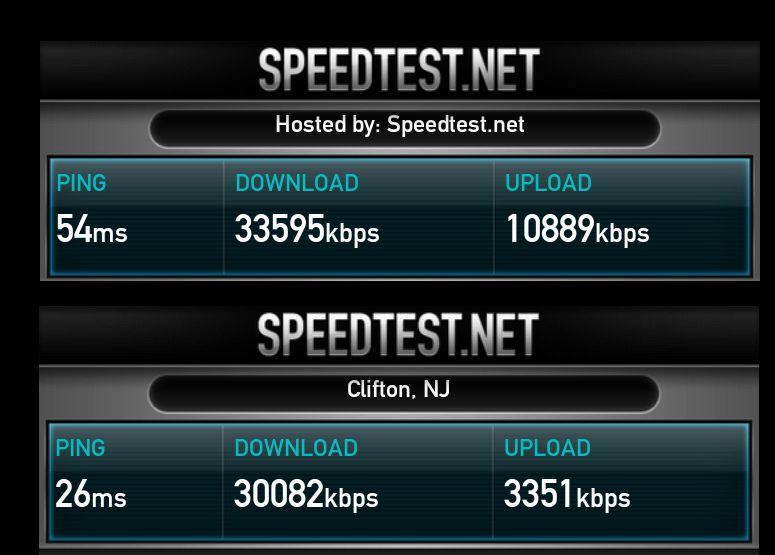
Now, LTE was only just turned on in New York City last month, so chances are that the network is nowhere near as saturated as the 3G network as only a limited number of devices (like the Samsung Galaxy Note I’m testing this week) work on 4G LTE. That said, it’s not just fast, it’s really, really fast:

One of these images shows the download speed on AT&T’s 4G LTE network. The other shows the cable internet I pay almost $80 a month for. Can you tell which is which? (Hint: LTE is faster).

If you’re a business professional and finding yourself often sending huge documents, videos, pictures and more to colleagues and clients while on-the-go, you know how frustrating 3G speeds can be. With AT&T rolling out 4G coverage to an increasingly large part of the country, maybe it’s finally time for you to upgrade.

Messages Beta for OSX bring iOS iMessage to the Mac – AVAILABLE NOW!

With the announcement of Apple’s latest desktop operating system, OS X “Mountain Lion” hitting the web this morning, one of the more exciting features for business on the move is that Apple’s iOS communications platform, iMessage, is coming to Apple’s Mac platform as, simply, Messages. The app is currently in beta, but works great for sending text, pictures and even video quickly and easily to your friends no matter where they are. iMessage already worked to ease communication between iPad and iPhone users—with the addition of a Mac App, Messages is sure to be a hit. You don’t have to wait for this summer’s Mountain Lion release, however: you can download the Messages beta today on Apple’s site.

Is bigger better? Samsung’s betting on it with the Galaxy Note 5.3″ Phone

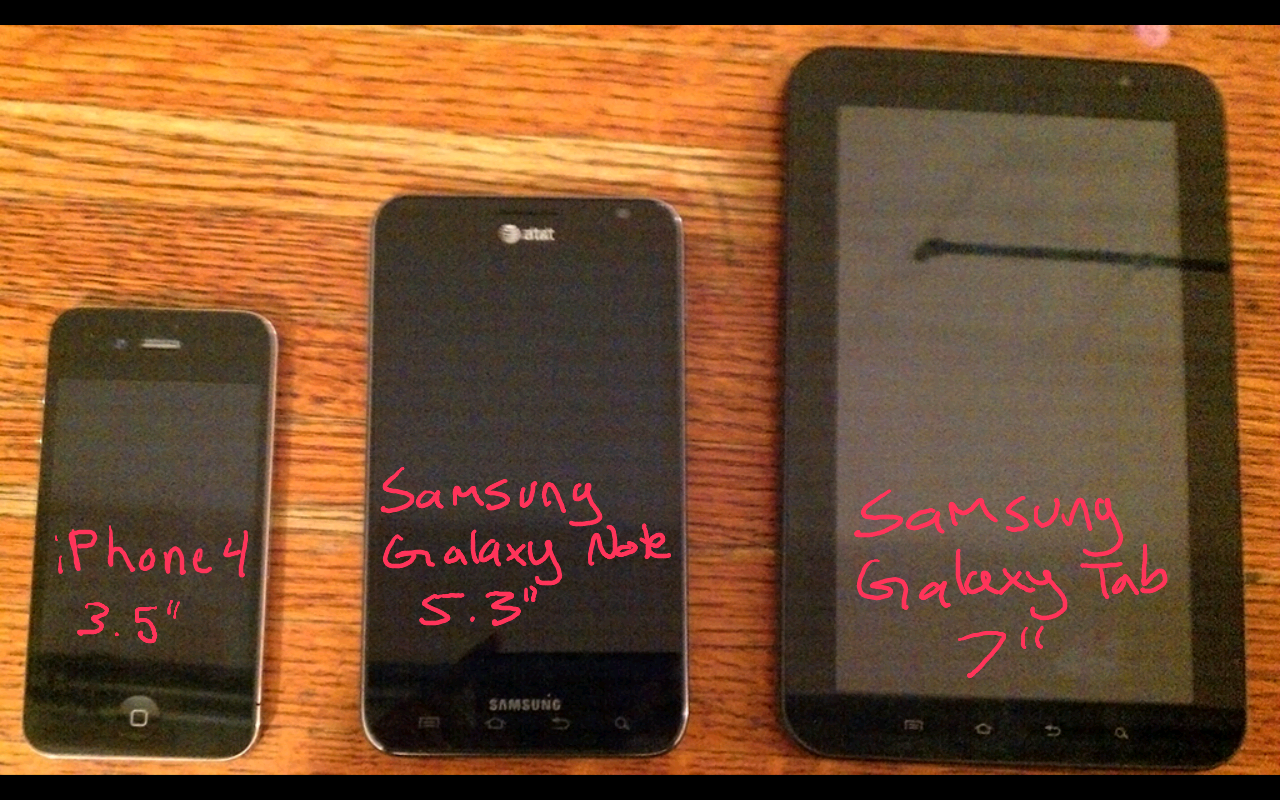
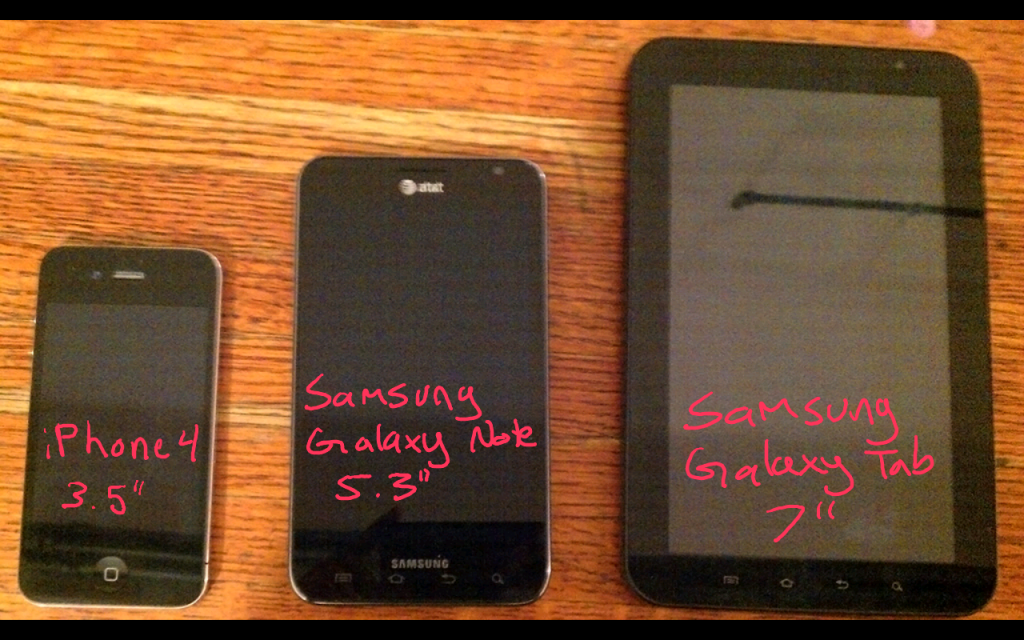
I got my hands on the Samsung Galaxy Note (available for preorder now from AT&T, arrives this Friday, Feb. 17th) a couple of days ago, and while I haven’t completely made up my mind about the device, there are a few things I’d like to share ahead of my full review coming next week. First and foremost, this is a big phone (a Samsung rep I talked to called it a “Super Phone”). As you can see below, it fits right in between the 3.5″ iPhone 4 and the smallest of Samsung’s Galaxy Tabs, the 7″ model:
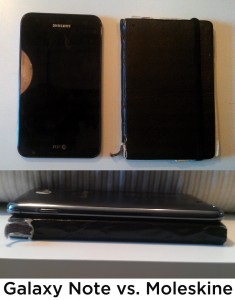
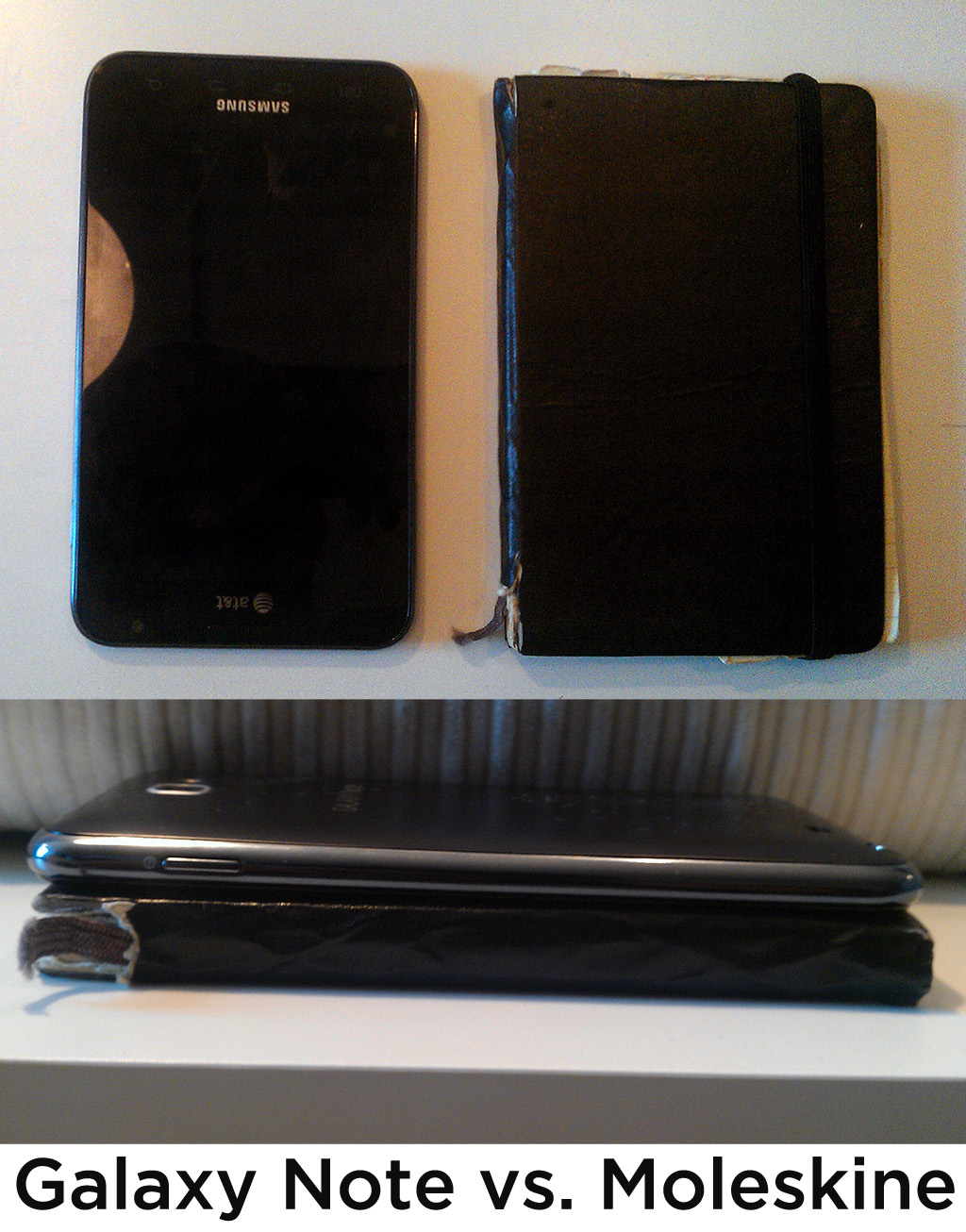
While some reports as to it’s size are exaggerated, there’s no denying that this is a big device. The best example of it’s size I could think of was that it’s roughly the same size/shape as a “pocket” sized Moleskine notebook. Granted, the Galaxy Note is thinner, but if you think about where you’d store a Moleskine (blazer pocket for me, or maybe messenger bag) then you probably have a sense as to whether or not you’d feel comfortable keeping this device in, say, the front pocket of your jeans.

However, for some this larger size is going to be a huge advantage. For one, it means the phone packs a massive 2500mAh battery, which should be enough to power it’s 4G LTE chipset all day long. This means you’ll be able to enjoy lightning fast LTE speeds (I personally witnessed over 33mbit download, 11mbit upload speeds) without having to search for a power outlet every few hours. The huge screen means you’re unlikely to miss-click a button, or click on the wrong link. It also means that for users with impaired sight or who need high magnification reading glasses, the device should prove popular.

This Is the Way You Do Stylus
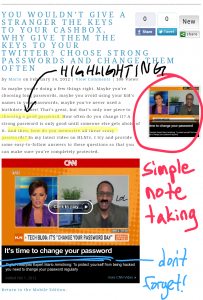
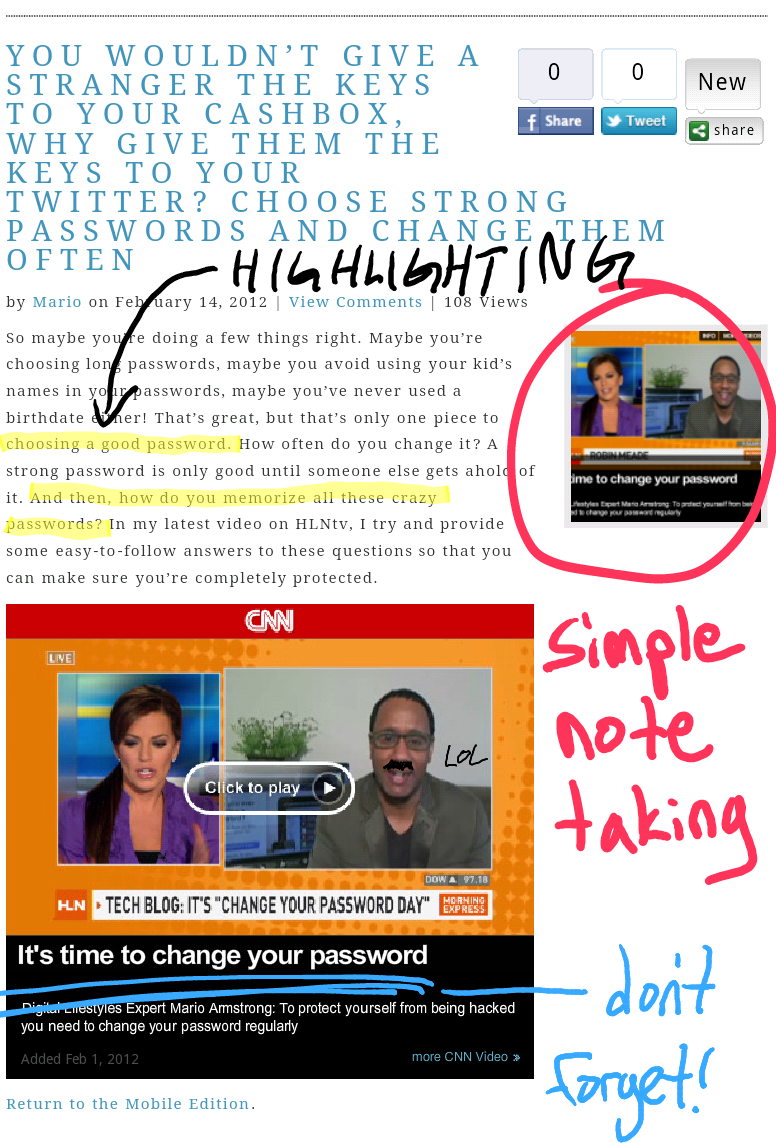
The second thing I noticed was how quickly and easily I was able to annotate images on the device, like the size comparison pic above. In a clear nod to both the Palm Pilots of the past, as well as the Nintendo 3DS, the Galaxy Note includes a hard plastic tipped stylus. With it, you’re able to quickly and easily take screenshots (a shockingly rare feature on Android devices), mark them up, take notes, highlight text, and more.

The stylus experience on the Galaxy Note is, frankly, remarkable. I’m a huge fan of using a stylus on my iPad 2 to take notes and draw, and it’s not an ideal experience. With the fat-tipped, capacitive styluses you have to use on the iPad (essentially, a fake thumb on a stick!), it’s hard to get accurate lines. Handwriting is often too-big to be useful. In contrast, on the Galaxy note I’m able to write small, and legibly, in the included S Memo app. In contrast to the iPad, where there’s something of an input lag (the lines you draw trail behind the location of the pen), input lag on the Galaxy Note is virtually non-existent. You can even input text with the stylus and ditch the on-screen keyboard, and in my brief tests the handwriting recognition software is shockingly accurate. Read More

Regulators Green Light MotoGoogle – “Official” Google Phone On Its Way?

Here comes Motogoogle! Even though regulators claim they will keep a “close eye” on Google, I don’t think anyone is surprised that U.S. and European regulators approved Google’s acquisition of Motorola Mobility, the arm that focused on portable devices. Most people think that this is Google finally getting into the patent war that has thus far been dominated by Apple and Microsoft. Those people are probably right, as Motorola has a ton of mobile patents (upwards of 17,000) that are included in the 12.5 billion purchase. But nobody really wants to talk about patents – Well, not me anyway. What I think is on everybody’s mind is will Google tap the Motorola talent to finally develop its own mobile device to coincide with its own mobile platform? Read More

AT&T’s Cloud Architect Is A Bold Step Into Public IaaS

Ed Lucente is a Sr. Product Marketing Manager at AT&T. You can find more blog content from Ed and other experts on emerging technologies on the AT&T Networking Exchange Blog. AT&T has sponsored the following blog post.

IT professionals like selecting computer or storage resources in the cloud using an intuitive, self-service portal and convenient configuration aids. AT&T’s Cloud Architect is a good example that appears to have addressed these two primary features.

This wide array of configuration options is what I think IT professionals and others will find most striking about Cloud Architect. It is important to have the structure to support all major hypervisors, including VMware, Citrix and Microsoft. A multitude of operating systems are supported, like CentOS, Debian, Fedora, Microsoft Windows Server 2008 and 2003, Red Hat Enterprise Linux, and Ubuntu Linux. Deployment models cover public, private, dedicated and “bare metal” servers.

Perhaps most intriguing is how rapidly applications can be deployed. Within five minutes, deployment for public or private instances and bare metal servers can occur. Dedicated servers deploy within two-to-four hours. Read More

Free Galaxy S II Phone with Tablet Purchase from AT&T

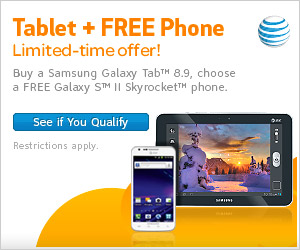
Astute readers of this blog have probably noticed this great deal from AT&T in the banner on our site. Basically, with the purchase of of a Samsung Galaxy Tab 8.9″ Android Tablet you get a FREE Samsung Galaxy S II Skyrocket Android smartphone. We like the Galaxy Tab 8.9 because it’s got a fast dual-core processor to easily handle your web browsing, Adobe flash, business document and even gaming needs, while maintaining a small size and form factor. It’s bigger than your basic Kindle Fire or Nook Tablet, but more portable than a full-sized Galaxy Tab or iPad.

As well, the Galaxy S II Skyrocket is a great Android smartphone. It’s got a huge screen, 4G connectivity, massive 1GB of RAM, 8 megapixel camera, and a gorgeous Super AMOLED Plus display. Basically, everything you’d expect from a high-end smartphone.

The best part? In a few months, BOTH of these devices will be getting the upgrade to Android’s latest operating system, Ice Cream Sandwich. Samsung confirmed this in a blog post last month, with both devices making the list of product they’ll be upgrading to Android 4.0 in the first quarter of 2012.

This is a limited time offer and applies to AT&T Premier members only, so check it out today and see if you qualify.

RIM CEO Shakeup: Meet new President and CEO, Thorsten Heins

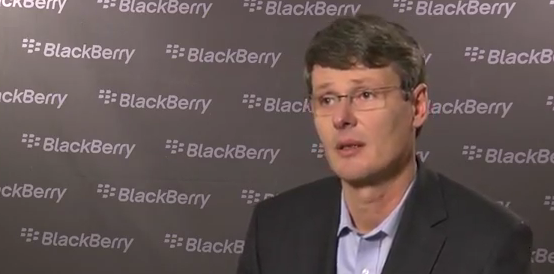
Thorsten Heins

RIM’s big announcement on Sunday, where they named their former COO of Products and Sales Thorsten Heins as President and CEO, may not be the seismic change that Blackberry fans have hoped for.  Many voices of the blogoshpere are openly wondering about the decision to appoint someone who has been long ingrained with the RIM culture, especially with many speculating that what RIM really needs is a big shake-up to stay competitive with “the other fruit company”.

It’s no secret that RIM has lost substantial market share recently. Some have switched to Google’s Android, but even more have swapped for Apple’s sexy consumer-oriented iPhone 4S.  The Blackberry interface has publicly lagged when compared to Apple’s slick and user-friendly features (like Siri, for example).  Apple is known as the master of the “big show”: updates to the popular iOS and hardware are released regularly and with much fanfare, and their fans wait with bated breath.  RIM’s OS fiasco has been just the opposite; if people have been holding their breath waiting for a Blackberry 10, they‘re likely turning purple as the product has missed its shipping date several times.

Additionally, Apple and Android have embraced open platforms that allow millions of developers to create apps for the platform, and RIM’s closed system seems geriatric in comparison.  To be competitive in this market, RIM should embrace the developer community and leverage their as-yet-untapped creativity.

With all this said, is RIM dead?   Read More

3 Big Data Predictions for Small Business in 2012: Why predictive analytics will empower businesses of all sizes in 2012


Ed Lucente is a Sr. Product Marketing Manager at AT&T. You can find more blog content from Ed and other experts on emerging technologies on the AT&T Networking Exchange Blog. AT&T has sponsored the following blog post.

Introduction

There’s plenty of talk about the benefits of business analytics — the analysis of “Big Data” to spot insightful trends, patterns, or correlations — for large enterprises in industry sectors like financial services, healthcare, and retail (see examples of analytics applications below). I’m surprised, though, that little attention has been given to the potential value that big data analytics can unleash for small businesses as well. Read More

Targus Dock Perfect Accessory for your New Ultrabook

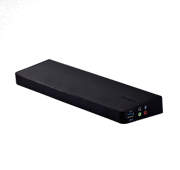
While not specifically a dock for Ultrabooks, these slick new docks from Targus that require a single USB 3.0 port do make the perfect match. Ultrabooks tend to have fewer ports and expansion options than other laptops thanks to their limited thickness, which means that you won’t easily be able to attach them to a variety of devices easily. These two Targus docks, the SuperSpeed video docking stations with and without power, carry MSRPs of $249 and $199 respectively.

Are people more important than apps? Microsoft, Nokia and AT&T are betting on it.

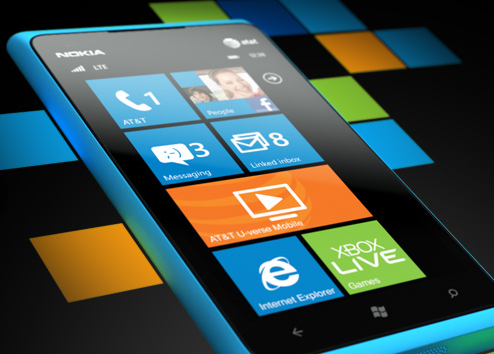
Today is the second day of CES and out of everything I’ve heard so far one line in particular, from AT&T CEO of Mobility Ralph de la Vega, struck me more than anything else. Speaking of the Windows Phone 7 platform in general, but also specifically about the new Nokia Lumia 900, Ralph said that the phone is “built around people, not applications.”

There’s no doubt that Microsoft is battling RIM for last place in the smartphone market. Even Android, once a laughing stock for it’s complete lack of apps, is today a solid #2 platform behind Apple in terms of both quantity and quality of apps. De La Vega’s quote struck me because it finally admitted something we in the industry all know: Microsoft is in no position to compete with Apple on apps. Apple customers are paying customers, and they buy apps in droves. Apple’s App Store is the most profitable mobile marketplace by a long shot, attracting the hottest developers and most exciting apps first.

But can people replace apps as the new metric by which a phone platform is judged? Read More