Are New Phones, a New OS and a New Name Enough to Save BlackBerry?

blackberry q10
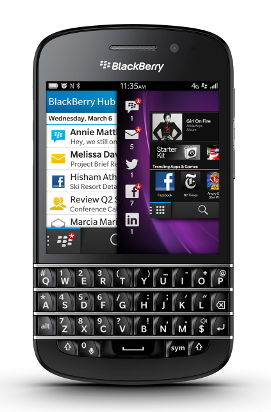
the new BlackBerry Q10

Yesterday’s huge announcements from Research in Motion begs two big questions: will the new offerings be any good, and will they be good enough? The company announced that they will officially be changing their name to BlackBerry, showing that they’re willing to put everything they’ve got into the BlackBerry product line, for better or worse. So what did the BlackBerry company show off?

First up, there are two new phones, the Z10 and the Q10. The z10 should look familiar to you, insofar as it could be a phone from any manufacturer, with a 4.2″ touchscreen and matte black finish. Which isn’t to say that the design isn’t nice — it is, it’s just not that revolutionary. The Q10, on the other hand, preserves what so many of us loved about BlackBerry in the first place: it’s a got a physical keyboard (in addition to a touchscreen). That’s huge. Most of the major manufacturers have followed Apple’s lead and abandoned the keyboard altogether, but there may still be a market for that keyboard yet. Unfortunately, we won’t find out for another few months, since the Q10 isn’t scheduled for release till April. The Z10 should be available from all the major carriers (except Sprint) in March.

But what about the OS? BlackBerry (fka RIM) is neither a hardware nor a software manufacturer, and it’s important they get both parts of the new BlackBerry experience right. So far, the most revolutionary idea of the new BlackBerry 10 OS is the notification hub, which aggregates email along with SMS, BB messages, and notifications from apps like Twitter into a centralized “inbox.” The idea is that it is more convenient to respond to all of your incoming communications from one place, and that functionally it doesn’t make a lot of sense to treat emails differently from Twitter notifications.

Why is all this so important? RIM’s market share has been dropping for some time, and most of their offerings seem to be on life support. Their last major offering, a tablet called the Playbook, didn’t get a lot of positive press. It takes a lot of time and money to release a new product onto the market, and these new offerings have already been delayed many times. This could be a last stand for BlackBerry, but we have some time to see whether they will be able to generate enough excitement to make a real comeback.
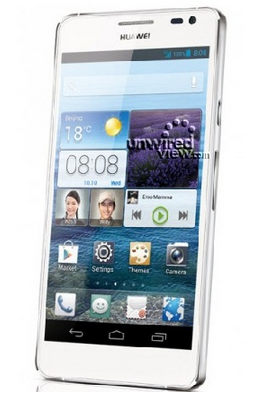
Who is Huawei? Meet the Major Cellphone Maker You’ve Never Heard Of

Huawei Ascend D2
Huawei Ascend D2

Huawei was big at CES. And that’s especially crazy, because a lot of the big guys (Samsung, Apple, Nokia) weren’t. So it was a great time for a less familiar brand to introduce itself. So who is Huawei?

Huawei is a telecom founded in China in the late 80s and still based in Shenzhen. It has offices around the world (including the US) and had a profit of 3.7 Billion in 2010. Yeah, 3.7 BILLION. It’s got a huge market share in China, but the company is also making huge inroads in Russia, India, and North America. They’re also trying to get into the U.S. market. According to CNET, they’ve hired a consulting firm that will help them raise their profile in the US.

But the problem with Huawei is that even though they have plenty of devices, they don’t work with any of the major carriers in the U.S. And they need to, because the major carriers have the power to sell phones at a discounted rate on contract: it’s those price points that consumers have come to expect, and any manufacturer would have a hard time moving units at an unsubsidized price.

But that’s only half the question: Huawei will also need phones that Americans want to buy. At CES they were showing off two devices that could have some appeal: the Ascend Mate and the Ascend D2. The Mate is a gigantic Android (4.1 Jellybean) device, with a 6.1 inch screen that pretty solidly qualifies it as a “phablet,” one of my absolute least favorite tech words. The Ascend D2 has a lot of similarities, but has smaller, more reasonable 5inch screen and a 13MP camera. Both resemble other phones on the market, like the Galaxy SIII and Droid DNA.

They might not be the most creative offerings, but they’re certainly on-par with some of the phones on the market and selling in the US. It’s not like all the phones we currently have to pick from are the most innovative either. So what do you think – would you welcome another phone maker to the market?

Mac Calendar App to Try: Fantastical

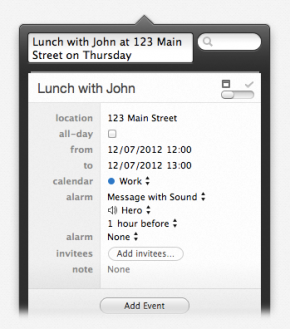
fantastical app screengrab
Fantastical’s “natural language” in action

The Mac calendar app, iCal, is fine. But it’s only fine: it could be a lot better. I actually prefer Outlook, but it’s not worth the trade-off to me to have to work on a PC. Fantastical is actually better than both.

Fantastical’s real advantage is in something they call the “natural language engine.” What that means from a practical perspective is that it can parse the general info entered into an event. In other words, you type in the basics of the event (Lunch with Mario at 53 Front Street at noon) into the main input area. Fantastical will use that info to complete the rest of the event’s fields, like date and time. It can even invite people from your contact list if you include them in the general info.

Other highlights include that you can incorporate all your calendars into one spot: Google, iCal, etc. It also lives conveniently in your menu bar for easy access. And it almost goes without saying, but of course there’s an iPhone app that goes with it.

I especially like that the app feels familiar, but the design aesthetic is nicer than iCal. There’s something about iCal that, in addition to being slightly counterintuitive, is also just kind of ugly. It feels dated. Fantastical is just better designed.

This is Mac desktop app, which means you can download it from the Mac app store. It’ll set you back $20, but you can try it free for two weeks. That should be enough time to figure out if Fantastical is right for you!

Check out Fantastical at the Flexibits website.

What Facebook’s New Social Graph Search May Mean for Small Businesses

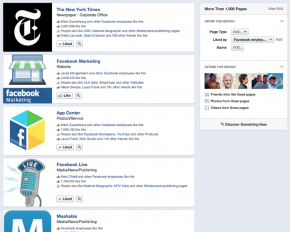
facebook open graphMuch has already been made of Facebook’s big press conference yesterday where Mark Zuckerberg unveiled new Social Graph Search. But what is it, exactly?

In a lot of ways, Facebook Graph Search makes a lot of sense intuitively: enough that it’s almost a surprise that we haven’t had it before. Basically, it’s using the ties between us all and all the data Facebook has to spit back out search results. Given how much data Facebook has, it’s easy to imagine that Graph Search could be pretty powerful.

Facebook itself gave several examples of how this kind of search will work. One idea was using interests or likes of your friends to find compatible invitees for a movie night. But for a less personal (but more far-reaching) example, Facebook point out how a journalist might use the Social Graph. You can read their official post here for a thorough explanation, but the basic idea is that journalists will be able to use FB as a Rolodex. You could look up people by where they worked when, or if Facebook Places has them at the scene of a big event.

Read More

BlackBerry 10 Coming January 30th With 15,000 Apps to Choose From

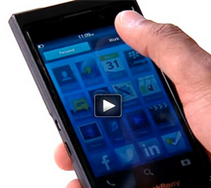
BlackBerry 10
BlackBerry 10

Research in Motion, aka RIM, the company behind the beleaguered BlackBerry, has officially announced that it will bring its latest BlackBerry to the world on January 30. Official press invites have gone out for the unveiling, and there are plenty of rumors and leaks about what we will and won’t see in the new revamped BlackBerry.

In case you haven’t been keeping up, BlackBerry 10, or BB 10, is RIM’s completely revamped proprietary operating system designed specifically for BlackBerry. As part of the release, RIM will also introduce complementary smartphones designed to run the new OS.

BlackBerry faces a familiar problem: it needs apps. One of the iPhone’s biggest selling points is both the variety and volume of apps available for download. Android, while initially lagging, has caught up with a very respectable selection. The less popular operating systems, like the Windows and BlackBerry, have fewer apps because they have a smaller customer base, and a smaller customer base because they don’t have a huge app selection. It’s a vicious cycle that can directly impact the success or failure of RIM’s risky new launch.

Read More

CES2013: Pebble Watch Set To Ship This Month; Watch Our Interview with CEO Eric Migicovsky

Pebble Watch Shipping Date Announced
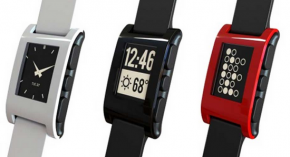
Pebble Watch, in White, Black or Red

CEO Eric Migicovsky announced at CES that the Pebble Watch will ship January 23rd.

Have you seen the Pebble Watch? It’s a customizable smart watch that uses Bluetooth to deliver info from your phone, like texts, emails, phone calls, iMessages and more. And of course, it tells the time. And it can run apps designed for it, and integrates with pre-existing favorite like RunKeeper. All of this shows up on the watch’s e-ink screen (similar to the screen in the original Kindles) that uses way less power than a traditionally illuminated screen like you’d get on your smartphone, so the battery can last way longer.

So why is this announcement especially exciting? Well, Pebble is interesting in that it’s a Kickstarter success story: it raised a record-breaking 10 Million, had something like 85,000 units ordered, and just generally signified a breakthrough that Kickstarter campaigns could and should be taken seriously.

It’s also important given the recent controversy around Kickstarters that have been funded, but missed their product delivery deadline completely. The fact that the Pebble Watch is a successful piece of Kickstarter hardware that will actually make its way to consumers is huge, and hugely redeeming of the entire Kickstarter model.


CES2013: iPhone 5 & Samsung Galaxy Charging Solutions from MyChargePower


We talk a lot about charging solutions: it’s hard to ever have enough battery life. Especially if you’re like us, constantly shooting video and using bluetooth. And let’s not get into the battery life on the iPhone 5.

MyChargePower is coming out with a bunch of options for iPhone 5 users that will feature the new lightning connector (of course) but provide different amounts of juice, depending on your needs. We run through all the options! Check out the video above for an overview of the options, and the one below to see how they look close-up.

Read More

NVIDIA’s New Gaming Console: What It Means

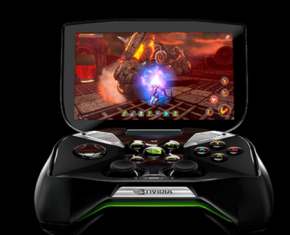
One unsual announcement that’s already come out of CES is from the graphics card company NVIDIA. Yesterday they announced “Project Shield” a handheld gaming console based on their new Tegra 4 mobile graphics chipset. While their previous graphics card for tablet, called “Tegra 3”, has been powering higher-end Android tablets this past year, Tegra 4 promises to deliver next-generation level graphics
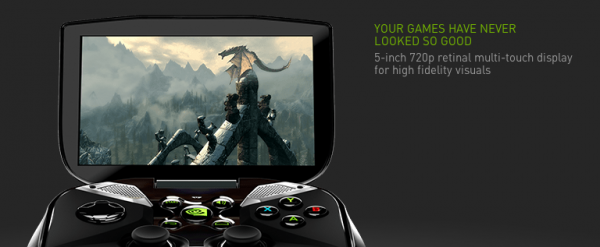
Both a handheld device and a controller that can stream your games wirelessly to a TV, the Project Shield gaming device from NVIDIA looks to fill a similar gap in the market as the Wii U—half-tablet, half console. Unlike the Wii U, however, Project Shield will be a portable device competing more directly with Nintendo’s 3DS and Playstation’s Vita console. It will be powered by the latest Android OS, so not only will it play games, it will run all of your favorite apps as well, just like today’s crop of tablet computers, albeit one with a console-grade controller built-in.

Can NVIDIA succeed? That’s a tough question. With Apple’s devices already eating into Nintendo’s marketshare in mobile gaming, and Sony already an established player in portable electronics, is there room for a 3rd contender that lacks the marketshare and exclusive titles that Nintendo and Sony have to offer? After all, being able to deliver world class graphics is one thing, but if gamers can’t get titles equivalent to Super Mario Bros., Zelda, Street Fighter and Assassin’s Creed, will they change systems?

Then there’s the question of price. Certainly, if Project Shield is to compete with consoles as well as portable gaming devices, it will need to compete on hardware with the next generation Xbox, Playstation, and the Wii U. Pack all that power into an HD touchscreen device and it’s hard to imagine NVIDIA bringing this to market for less than $400. When compared to the cost of a Nintendo 3DS at $169 or a Playstation Vita at $249, it’s hard to imagine that consumers will be enticed at that price point.

But in order to survive into the next millenium, this may be a crucial move for NVIDIA. In gaming, they have been struggling. While their chips power Sony’s Playstation 3 console, the better-selling Xbox 360 and Wii consoles use chips from rival AMD (formerly known as ATI). Nevermind the fact that the just-released Wii U from Nintendo uses AMD chips as well.

In mobile, Tegra 3 found mass-market success in the Nexus 7 tablet from Asus and Google. But it’s worth keeping in mind that the Android gaming market has a long way to go to catch up with Apple’s iPad and iPhone systems where the latest games are often launched first, sometimes exclusively. While the Nexus 7 is a great device for reading books, browsing the web, engaging on social media, and watching movies, it isn’t exactly known in the marketplace as a “gaming tablet.”

However, if NVIDIA can find partnerships like the one with Google to get Tegra 4 onto more devices and raise awareness around Android gaming, that’ll be the first step towards success with the platform. The trickier problems is how to make gaming on Android the next big thing.

Read More

What You Should Know About Apple & CES

First up, if you’re an Apple fan and looking for the latest iPhone, iPad or Mac news from CES, don’t hold your breath. Apple doesn’t actually show up at CES themselves, so there won’t be any major announcements from them this year. You’ll have to wait at least a few weeks to see if Apple has any new products at their own launch events.

But that doesn’t mean accessories for Apple’s devices won’t be here. In fact, with companies just starting to release new products that take advantage of the iPhone 5 and the latest gen iPad & ipad mini’s Lightning port, there are going to be tons of Apple-related products to show off. Plus, tons of apps and devices that work with apps will be launching at this year’s CES, plus everything from wireless charging solutions for the iPhone to the latest and greatest iPad cases, keyboard docks, and who knows what other innovations, there will be tons of accessories and innovative technologies that add value to Apple’s products on display this year.

So even though Apple themselves won’t be here, we’ll be checking out everything Apple all week long—stay tuned!

Read More