Back to the Office: Make the Most of Your Vacation, Even Back at Work

Labor Day is almost here, and that means that summer is just about over. Hopefully you took some time to take a vacation, staycation, or whatever helps you relax and recharge. It’s important for our health, mentally and physically. Vacation helps reduce burnout, decreases our resentment of others, and actually helps us concentrate and make less mistakes once we’re back on the job.

So, all week we’ll be talking about “back to the office,” with tips and tricks to help you hit the ground running after your vacation. Perhaps the biggest (and best) thing you can do for yourself is to use the clarity that relaxation provides, before you get too bogged down in the details. A few things to think about, while you’re still feeling fresh and relaxed:

What are my realistic goals for the next six months? This can be both personal and professional – after all, it’s hard to separate these. Take this opportunity to reflect on what’s important to you, and think strategically about how you can get there. Write it down, and give yourself deadlines, not to give yourself a hard time, but to think about how you can (and will!) make progress.


Read More

Keep Facebook messages from being labeled “Seen” with Crossrider’s Chat Undetected

Did you know that Facebook messages have “read receipts?” Basically every time you read a Facebook message, the sender on the other end can see exactly wheat time you read the message – down to the minute.

It may be nice to know that others have seen your messages, but it can be incredibly frustrating if you’re the recipient! After all, if someone knows you’ve seen their message but haven’t responded, they can easily misinterpret that as avoidance, when really you’re just busy or you know, forgot.

Read More

Share Mobile Data Across Devices With AT&T’s New Plan

Share mobile data with AT&TWe all know about the mobile family plan: everybody shares minutes so that you can take turn being the big spenders and having long chats. Mobile minutes are all well and good, but these days what we really want is data!

AT&T has risen to the challenge with a new plan to let you share mobile data across multiple devices. It’s the old-style family, but now for data. And the more data you choose, the less you pay per gigabyte. You pick your plan (from 1GB to 20GB) and get unlimited voice and text on your primary device.

Then you can add other devices, including tablets, smartphones and mobile hotspots, for an additional cost per device, but with access to that big chunk of data. You can put up to ten devices on that same amount of data, and the bigger your data plan the less it costs to add another device.

Ready for some data? AT&T’s plan to help you share mobile data is available now. AT&T is a sponsor of SmallBizGoMobile.

Should You Care About Your Klout Score?

klout logo
Klout: the only way to win is not to play.

Do you know about Klout? It’s a company that purports to measure your influence online, based on your activity on Twitter, Foursquare, Facebook, Google+, etc. Klout then assigns users a score from 1 – 100 – the higher the score, the more influential you are. Supposedly, anyway. And in theory it would make sense to want a higher Klout score, right? After all, influence means people listen to you, and that’s helpful for all kinds of things.

But does Klout actually measure influence? Well, it’s hard to say. A large part of your Klout score is based on how active you are on social networks, which is important, but certainly not indicative of the quality of your participation, or how knowledgeable (aka influential) you actually are. After all, lots of retweets may take time, but it doesn’t necessarily take a lot of expertise. Klout also says that the number of networks you have connected to the service also determines your influence, so presumably Klout believes that doing a lot of social networking in a lot of places is a synonym for how important you are. It’s hard to say, really, whether there’s any validity to the Klout algorithm, since it’s secret. They’ve announced plans to make it more transparent, but we’ll have to wait and see.

What we can see is some glaring anecdotal evidence is that something is just not right with Klout. The TechCrunch writer with the same score as founder and industry tital Mike Arrington. At one point Tim Berners-Lee, the creator of the World Wide Web, had a score in the low 70s. Spam bots have been known to have higher scores than humans. There’s something about real-world influence that’s obviously not being translated to their algorithm. And even a few days away from the social media machine will cause your score to drop – but certainly a vacation doesn’t mean you’ve lost any actual influence or knowledge in the real world. So really then what Klout measures is how good you are at socializing in a way that’s good for your Klout score. Read More

Adobe Flash: It’s Time to Move On

HTML5 Badge: HTML5 is replacing FlashFor years, web developers (and clients) loved Flash. It allowed creativity (and marketing!) unbounded by the crude design capabilities of html and css, and it seems like there was a time where every site had invested in a flash intro, full of sweeping graphics and logo fades.

Well, the time of the Flash intro is over. It sounds harsh, but for most small businesses, if you’re still using Flash it’s time to update your site ASAP. Why? Well, it’s a mobile world, and Adobe’s battle with Apple means that iDevices will never, ever support Flash. It’s just not going to happen, and it seems like we’ve gotten used to it at this point. And as of now, Android devices have stopped supporting Flash too. On August 15th the Google Play store pulled Flash, so that Android users will no longer be able to install Flash, and the upcoming Android release (4.1 Jellybean) will not include Flash at all. Users that already have Flash will continue to receive security updates, but that’s it.

That’s not to say Flash is going anywhere for awhile. Flash content is still incorporated in many sites across the web, mostly through video. And it takes a long time for technology to be completely “phased out;” Windows 8 will still support Flash, and it’s still the way that video providers deal with the rights. Eventually we’ll be moving to HTML5, the latest set of web standards that supports more sophisticated and interactive content, as well as incorporating video standards. But right now, HTML5 isn’t completely supported by all browsers, so we’re still in a kind of standards limbo.

So what is a small business person to do? First and foremost, don’t use Flash, unless you have technical needs that absolutely demand it. If a cutting-edge web presence is crucial to your brand image, then HTML5 is a good idea, as long as you make sure it degrades gracefully and your important content can still be seen by people in IE7. But for most small businesses, reliability and browser cross-compatibility is preferable to cutting-edge technology. Aim for a quality website presence that doesn’t rely on Flash and instead can be viewed easily by anyone anytime on just about any device.

Questions? Leave them for us in the comments – we’ll do our best to help!

Instagram Adds Maps, Another Reason for Small Business Owners to Pay Attention

instagram maps screenshotDo you use Instagram? The photosharing app has gotten huge in the last year, and now boasts 80,000,000 users. To put it in perspective, that’s almost ten times the entire population of NYC. Plus, it was acquired by Facebook for – no joke – a billion dollars. That gives the service access to the money and resources of one of the top tech companies in the world. Long story short, Instagram isn’t going anywhere, and it’s a force to be reckoned with.

The first big new feature announcement since the acquisition was rolled out yesterday. It’s called photo maps, and it’s essentially geolocation. Your photos are displayed on a map based on where they were taken, with the streamlined and simple design we’ve come to expect from the service.  Previously the only way to experience Instagram photo was as a timeline, moving backward or forward through the past. The new map feature is much more immersive, and helps conjure that feeling of “being there” even better, which is exactly what we want from our photos in the first place.

We hear a lot these days about how brands should be engaged in storytelling, and Instagram is a great place to start. Small businesses can use the new mapping feature to be engaged with their customers and consumers throughout where they live, not just where they do business. It’s easy to imagine a small business taking photos where they source supplies, with partners in the community, or at drop-off point for deliveries to bring that business to life, so to speak. And what if a small business found a way to encourage folks to tag photos from their location? It’d be a great way to get a business name our to the networks of those users. Think of Instagram’s new map feature as another way for customers to find you – with the built-in trust bonus of a referral from their network.

Have an Instagram marketing idea? Let us know in the comments. And check out these examples of brands using Instagram to help get the word out.

Meet Medium: The New Publishing Platform from the Twitter Guys

Earlier this week the Obvious Corporation, the company led by Twitter co-Founders Biz Stone and Ev Williams, announced a new product aimed squarely at the publishers of content. It’s called Medium, and it while it may remind you of a lot of Web 2.0 platforms you’ve seen before, it manages to be new without being hard to understand.

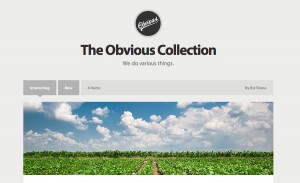
Medium Collection Example
The Obvious Corporation’s Collection on Medium

The basic idea behind Medium, at least according to Ev Williams, is that it should be a place to publish that rewards and promotes quality while still being open to everyone, including the unknown individual. Publishing is of course the domain of Obvious, given that before they created Twitter the same people were responsible for Blogger, which helped unleash self-publishing on the world.

The Medium platform itself is flexible enough to allow lots of kinds of content, including photos, videos and text (long or short form). Those individual pieces of content are then organized into collections. The Medium team has posted examples, including travel photography and crazy stories. Collections are either open or closed to submissions, depending on the creator of the collection, but all pieces of content can be voted on by users. The most popular (ie highest quality) items go to the top of the list, ostensibly to relieve readers of sifting through tons and tons of stuff. Read More

Last Chance To Win a Free Duracell Powermat + VIP 40/40 Party Tix

Today is your last chance to win a free Duracell Powermat 24-Hour Power System! Entering is simple: just like Mario’s page on Facebook and you’ll be entered to win. But hurry: the contest ends tonight at midnight!

Duracell PowermatDon’t forget, this is your chance to get VIP access for you and a friend at our Power House Party on September 12th. You’ll join Mario at Jay-Z’s 40/40 Club in NY to celebrate Socialcam users with over a million followers, and you’ll get to charge your phone right on the walls of Jay-Z’s new club with the integrated Powermats!

To enter to win VIP access to the party, simply enter for the Powermat drawing and get another friend to sign up too. It’s simple, but you only have one day left, so get on it: enter now!


IM Aggregator imo Adds Free Voice Calling For Mobile Devices

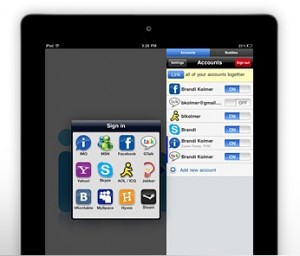
Popular chat app imo has added free voice calling to the most recent incarnation of its app for iPhone, iPad and Android. imo users can send and receive voice calls without using cell minutes, though both the caller and callee have to have the app on their device.imo adds free voice calling, even on iPad

The imo app began life as an IM/ chat aggregator, allowing you to centralize all your contacts and chat with everyone in one spot on your desktop and/or mobile device. Group chat is still supported in the new version, as is Skype, AIM, GTalk, MSN Messenger, Jabber, Facebook chat, Yahoo chat and more. imo also offers the “voice IM,” which allows users to send 90 second voice messages instead of actually typing – kinda like an updated version of the Nextel phone/walkie-talkie.

imo isn’t the only group chat or chat aggregator out there, but it does offer a social twist: imo wants to encourage people to make friends through the service too. But don’t worry, it’s nothing like Chatroulette. It’s more like a very temporary bulletin board, where users can ask and answer questions just to see who’s out there.

AllThingsD has a great interview with the founders, brothers Ralph and Georges Harik, about their vision for the service. Otherwise, imo is available for iPhone, iPad, Android, Blackberry, Nokia and Windows Messenger.

Have another app for free voice calling that you like? Let us know in the comments!

How to Safely Send Sensitive Information Over the Internet

This message will self-destruct. Well no, not really, but sometimes it would be great if sending something secret (like a password or username) really could disappear after it has gotten where it needs to go.

send sensitive information with QuickForget
This message will self-destruct.

If you find yourself emailing passwords (a security no-no!), try QuickForget.com. This simple site is designed for one thing, and one thing only: making sensitive information available temporarily. Use QuickForget to set up a simple text-based message, say for example the top secret coordinates the last four digits of your social security number. You can send a link to that message to a recipient, and then the message will self-destruct after either a specified amount of time, or a certain number of views.

Self-destructing messages are cool, but what are the practical uses here? Well, first off it’s nice to know that you don’t need to trust the recipient to delete sensitive information, whether its business or personal. Instead, that info will be gone forever. It’s also a smart idea to keep certain pieces of identifying or important information away from each other. For example, if you wanted to send important and sensitive website login credentials, you could send part of the info over email and the rest through QuickForget.com, so that if your email were intercepted a would-be nefarious character wouldn’t have all the info needed to get into your site.

It may sound a little paranoid, but when it comes to web security it’s hard to be overly cautious. And you know what they say, just because you’re paranoid doesn’t mean they’re not out to get you!